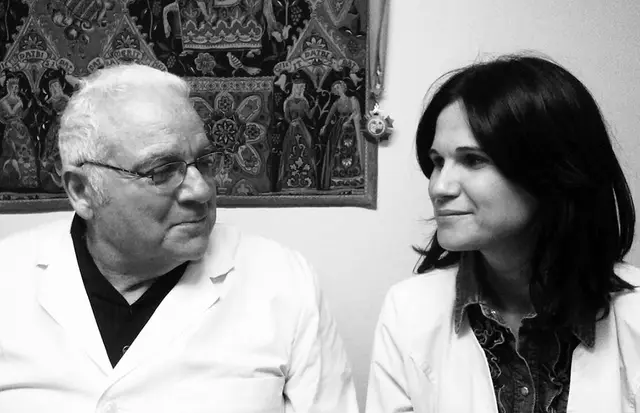
On 18 September, the La Valona building on the Elche campus of the Miguel Hernández University (UMH) hosted the 1st Conference on Premenstrual Dysphoric Disorder, “The role of the uterus–brain axis in women’s health”, organised by DISFEM and sponsored by the PMDD Foundation.
Many disciplines around one question
Researchers from different fields and institutions (the Spanish National Research Council, the University of Barcelona, ISABIAL and CIBERehd, the Catholic University of Murcia and the UMH itself, among others) spoke about the vaginal microbiome, neuroinflammation, endometrial inflammation and artificial intelligence applied to diagnosis. Dr. Jorge Lolas, whose inflammatory approach to premenstrual syndrome I use in my practice, took part with a video contribution.
What DISFEM is
Clinical experience raises questions that only research can answer. That is why I have promoted the rigorous study of PMS and PMDD, bringing several research groups together through the DISFEM project: a clinical study of premenstrual dysphoric disorder and severe premenstrual disorders, backed by the Dr. Balmis General University Hospital in Alicante, the Alicante Institute for Health and Biomedical Research (ISABIAL), the Miguel Hernández University and the PMDD Foundation, in collaboration with the CREATIO group at the University of Barcelona.
DISFEM compares women with severe premenstrual symptoms with a control group to study the vaginal microbiota, the inflammatory cells of the cervix (mast cells) and the immune and inflammatory mechanisms that could explain the disorder. My doctoral thesis at the UMH, “Premenstrual dysphoric disorder: from the clinic to the omics”, is part of this work.
The support of the PMDD Foundation
The project is funded and supported by the PMDD Foundation, where I serve as Medical Science Liaison. It is a foundation working to make PMDD known, recognised and researched: it builds partnerships with hospitals, universities and scientific bodies, trains healthcare professionals and provides information for women affected and their families.
Why it matters if you have PMS or PMDD
PMDD is the most severe form of premenstrual syndrome. It is recognised as a diagnosis in the DSM-5 and in the World Health Organization’s international classification of diseases, and yet it is often mistaken for depression or bipolar disorder. It is not “just nerves” and it is not something you simply have to put up with: it has a biological basis and deserves a thorough assessment. Different groups researching it together is not a promise of a cure, but it is the way to understand it better and treat it with sounder judgement.
Watch the conference and take the first step
The conference was streamed live and the full recording, published by the UMH, is available to the public: you will find it at the top of this article or on YouTube. It is in Spanish.
If you would like to know how I work with premenstrual syndrome and PMDD in my practice, or to put a name and a measure to what you are going through, you can start with the PMS self-assessment test.